-
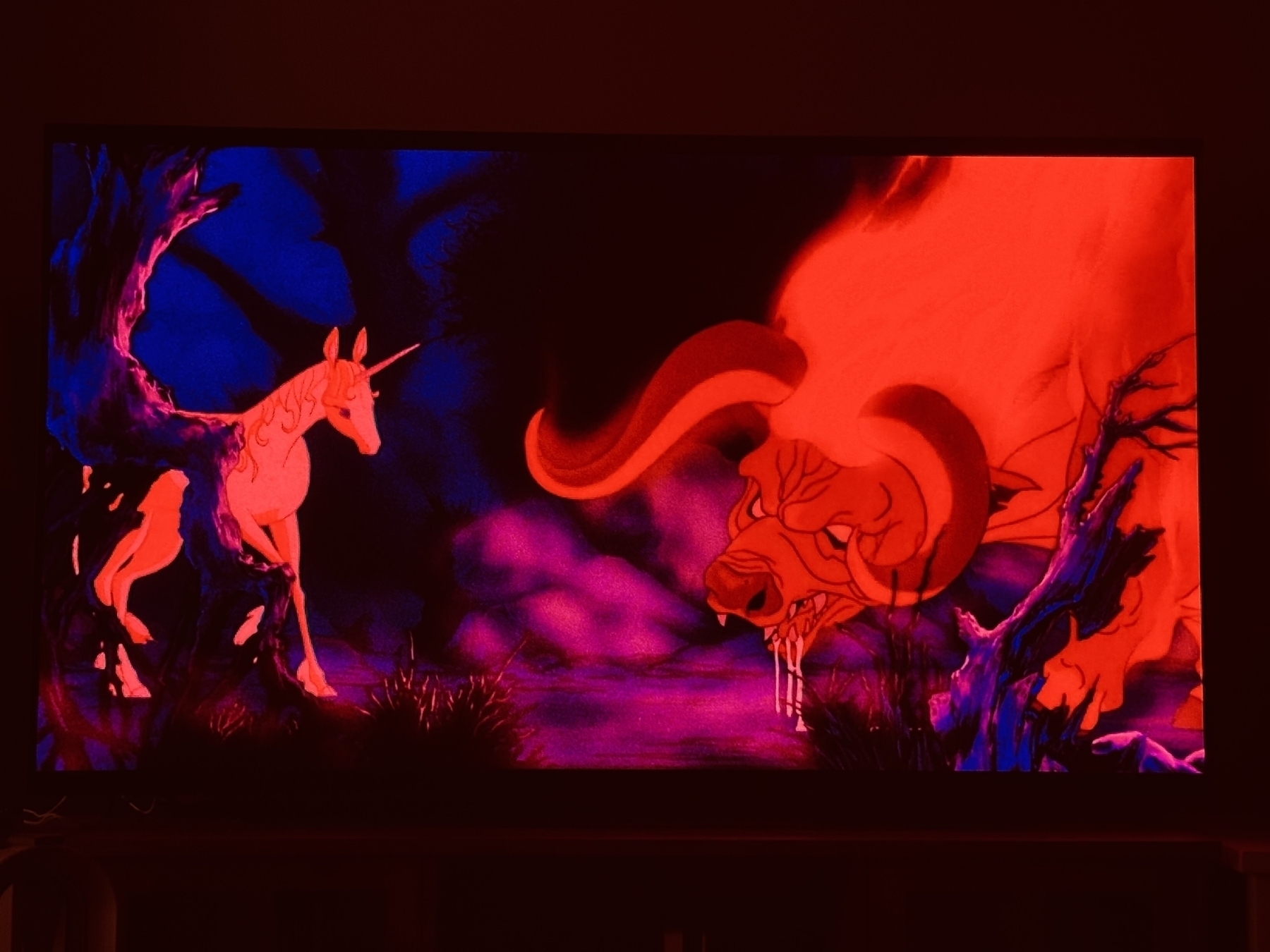
The Last Unicorn, 1982
-
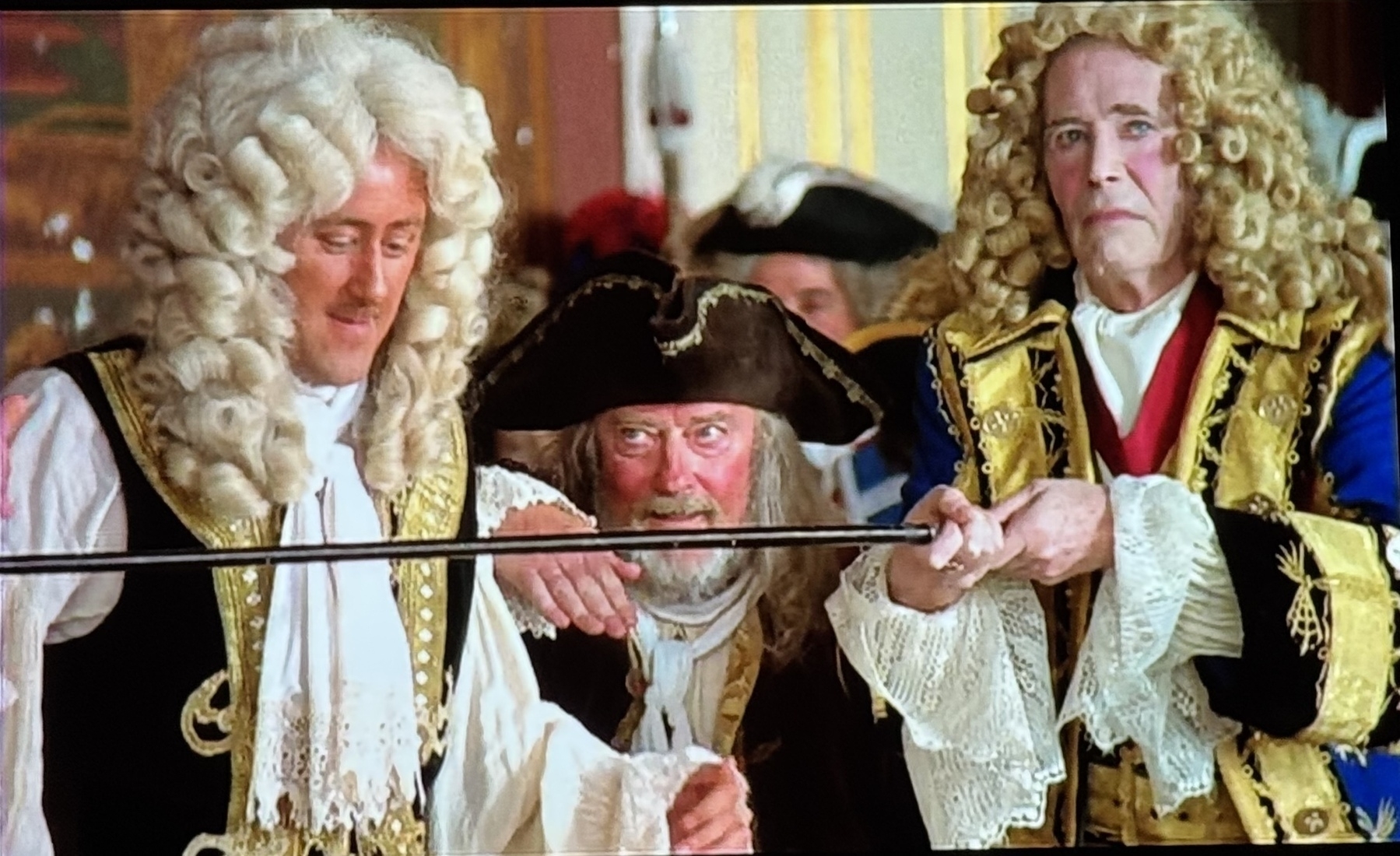
The leaping and creeping ritual in Gulliver’s Travels—where contestants jump over or duck under a stick held by the Lilliputian emperor, with the winner being awarded high office—is only a bit less absurd than the U.S. Electoral College. Anyway, here’s Peter O’Toole playing the Lilliputian emperor.
-
What is sound?
What is sound? Yes, it’s noise—but scientifically it’s changes in air pressure caused by vibration. The pressures it creates are inherently analog, that is, they’re defined in relation to something else and are continuous, with many possible states.
For humans, audible sounds are all within the range of 20 Hz to 20 kHz; the higher the value, the more “high-pitched” the sound. Think of low, rumbly bass frequencies as being near the lower bound of that range, and sharp feedback from a microphone being nearer the higher bound.
Analog vs. digital
Analog is the opposite of digital. If something’s digital, it has only two possible basic states: 0 (off) and 1 (on). Digital media is discrete (not continuous) and doesn’t allow for continuous values in the way analog does.
At this point, maybe you’re asking If sound is inherently analog, what does it mean for something to have digital sound? How can all the possible pressures of sound be represented by 0s and 1s?
The “digital” part refers only to how the sounds are represented on their storage medium, whether that’s a streaming service such as Apple Music or Spotify (either of which plays remotely stored files), a CD, or a Super Audio CD1. To create digital sound, the original analog signal is sampled: Its continuous signal is reduced to a discrete one, with each sample a “snapshot” of the signal’s amplitude at a point in time. Together, these samples, which are represented as numbers and spaced evenly in time, can be reconstructed into the original signal by a digital-to-analog converter, a small computer that converts these numbers into corresponding pressures.
I pour an inch of iced tea to match the level of the rain gauge I’m eyeballing from memory. The sound tumbles over the cubes below, its noisy current apparently familiar with the thunder, as if it’d sampled it at a low rate and shallow bit depth. Back in the waiting room before college, a lake that’d once swirled with the entirety of adulthood in its matching-color eye and beckoned for me to drown within it, had been Aral Sea’d, exposed as the aquatic emperor with its bed cracks visible to all. “Curvature, the earth, unevenness, and the wind”—a teacher’s words came through discretely as I digitally tested the lakebed for a hole to Wonderland and imagined it as the now-drunk-to-nothing cauldron of the first tea party. A Neanderthal atop a mastodon and a giant rabbit once used elaborate sluice gates, worked by pre-steam engine empowered labor, to fill this pond with glacier water and chunks and the hibiscus flowers whose pedals bled into something that already transcended Southern-ness.
If I wanted to accurately capture the sound of clinking ice cubes, let alone a collection of instruments playing simultaneously, on a digital medium, then two things determine the fidelity of my recording:
- The bit depth: You’ve likely heard something described as “8-bit,” “16-bit,” or “64-bit.” Without going too much into mathematics, this descriptor, called the bit depth, tells you how many possible values there are in the computing system in question. For the purposes of digital sound, it denotes how many possible discrete steps there are for each sample to be assigned to. For example, 16-bit audio like the standard CD has 65,536 possible steps that a sample can be assigned to.
- The sampling rate: This is simply how frequently I’m sampling (taking aural snapshots of) the original sine wave. For a CD, the sampling rate is 44,100 Hz—a strange-seeming number that nevertheless has some logic behind it: It’s the product of the squares of the first four prime numbers (2, 3, 5, and 7), which makes prime factorization easier.
Losing it over lossy-ness
What about “lossy” audio formats? What’s that, you didn’t know that most music you listen to has “lost” some of its original character, because its file size has been greatly diminished or at least compressed so that it can be transmitted over a network (like the Internet)?
MP3s, which dominated the 2000s with the advent of the iPod, are often 90% smaller than the on-disc files they were ripped from. Modern streaming services use lossy files, too, although Apple Music at least offers lossless quality—but you won’t actually get it unless you use wired headphones. Most implementations of Bluetooth are lossy and they always compress the file. Some wireless forms of transmission, like AirPlay-ing a song from an iPhone to a HomePod, are lossless because they use Wi-Fi instead of Bluetooth.
Does lossless music sound better, though? You may think there’s a huge gap in quality given the order-of-magnitude difference in size. But the human ear isn’t that discerning. The range of frequencies that a standard CD can reproduce—from 20 Hz (below the lowest key on a piano) to 20 KHz (something that most adults can’t hear)—is already outside the extremes of human perception. Plus, the algorithms that create lossy files are optimized to remove the parts we notice the least.
I’m back from the lake, soaked with the feeling of needing to look into something just as sensuous as its bygone fullness, so I’ve got a curved 1996 TV with windy signals sweeping across its face. In a later life, it’ll be dusty, birthed anew though old with nostalgic reverence, but right now it’s pristine and basic, with speakers that yield from a cartridge-loading game console a no-temperature no-color sound—anti-adjective waves, sweeping past my enlarged elf-like ears, red from excitement, with the spirit of being and doing rather than of looking and sounding and feeling. My ears once pulsing with analog cinders are cooled by digital rain that angles its math earthward. The sound began in the CO2-exhaling fires of circuit board production and then a factory blew it across the sea on a blimp of emissions, harmless by all appearances in its big boxy cartridge with just smokeless ones and zeroes inside, etched errorlessly on metal. Next up there’s a truck trek from the dock and some plastic to unwrap and discard to live an eternal life unseen, shining curvily and brokenly like that TV the moment some hypermodern post-man Nouveau Neanderthal digs it up despite the newly Venus-like pressure on Earth.
Though the struggle is seemingly won by lossy formats, what if on some other timeline the exact opposite had prevailed? What about a format that was somehow even “realer” than CD? Enter the…
Super Audio CD
Super Audio CD was meant to succeed the CD as the dominant physical music format. Most people don’t know what it is, and that’s understandable—it arrived right as the music industry was about to collapse into piracy and financialization and it confronted you with two things you’d expect from such a harbinger: Few noticeable improvements for its high cost, and aggressive copyright controls.
SACD was meant to kickstart another cycle of format replacements. The CD was approaching its 20th anniversary, cassette tapes were dying, and vinyl was dead enough that had yet to be zombified back into existence. The maturity of the CD lifecycle, as Andrew Dewaard describes in his book Derivative Media, arrived in the 1990s when there was already a nascent trend of trying to financialize music by making it more like rent (I’m sorry, a “service,” which all digital things seem to be becoming2), something that pointed to the demise of one-time physical disc and tape purchases:
Transforming music royalties into an investment strategy is not a new idea; David Bowie even sold “Bowie Bonds” to investors in 1997, based on income generated from his back catalog. “For the music industry the age of manufacture is now over,” Simon Frith claimed back in 1988, as music companies were “no longer organized around making things but depend on the creation of rights.” What is new is that those rights are now much more lucrative and have attracted much bigger financiers. As opposed to physical media, which was typically purchased only once per format, listening to music on a streaming service produces a financial transaction every time a song is played, dramatically increasing the value of older music.
The surge in piracy that accompanied the popularization of Napster in 1999-2000 undoubtedly hurt the music industry, but only one segment of it: artists. The profits they could make from selling immensely profitable LPs, CDs, and cassettes evaporated. Meanwhile, laws such as the Digital Millennium Copyright Act plus DRM controls in iTunes and the eventual “you have no control over this” total platform control of streaming services such as Spotify and Apple Music empowered labels, who exploited this crisis and funneled the entire music industry through their subscription services while paying out literal fractions of a penny for each stream.3
This labor-hostile reality, in which musicians are barely compensated for their music, skews listening to musicians who are already famous and favored by the highly centralized software algorithms that underpin streaming service interfaces. Breaking through thanks to regional radio or an unexpectedly popular CD release is no longer an option.
Given today’s context and how it compares to what came before, SACD looks now like a strange transitional form between modes of capitalist exploitation: The ownable physical product, of which it was the real attempt to create a mass-market optical disc format for audio4, and the locked-down streaming future:
- Unlike CDs, which were unencrypted, SACDs were and still are a pain to rip. They’re not recognizable by standard Windows or macOS optical drives, let alone standard CD players. You need dedicated playback hardware or else a pricey industrial solution, just as you need to pay money forever to maintain access to a music streaming service.
- But all this protection was meant in part to prevent the type of broad (and free) distribution that CDs had enabled. You couldn’t make CD-R copies of SACD discs and couldn’t easily leak their tracks to the internet.
- They also aimed to go even further than CDs had on the quality front, by radically changing both the bit depth and sampling rate components mentioned above. SACD lowers the bit depth to just 1-bit (so everything is literally “on” or “off”), but bumps the sampling rate up to over 2 MHz. So there are many, many more samples of the analog signal, but instead of each sample storing a step that could fall along thousands of possible values, it just indicates whether it’s higher or lower than the one before it. This setup was branded as Direct Stream Digital (DSD) and was designed to give a more analog feel to digital recordings.
- Finally, it allowed six discrete channels instead of the two (“stereo”) of CD. SACDs can output up to 5.1, meaning there’s the two stereo channels plus a center channel (usually for vocals), two rear channels, and a subwoofer.
The in-betweenness of SACD is embodied by how it’s a digital format that for years was easiest to play over analog connectors such as RCA jacks. The very first SACD player, the Sony SCD-1, could only play SACDs over either RCA or XLR connectors, both of which are analog. The digital optical and coaxial connectors couldn’t be used with SACD discs because they lacked bandwidth—as well as copyright protection.5 Modern hardware that can play SACDs, such as some Blu-ray players, can usually only do so via HDMI, which requires a receiver that can decode DSD, which can’t be assumed.
And for what? Does it sound better? SACD was a pivotal moment in the software-ization of music, in that its new features—aside from the 5.1 sound, if you had the right setup for it—had the inscrutability and utilitarianism of a software version update or patch. It was “moving forward” for its own sake, browbeating and exhausting listeners who had long since stopped noticing the belated improvements. Except here, they had the choice not to endure it because of the newer and cheaper MP3 and streaming markets; there’s something optimistic there, in that it reminds us that maybe someday we could break free from how shitty software has made our entire world.
When I first saw you, I knew you possessed the fiery shape to imprint yourself on my memory as if I were an inanimate disk drive—a metal machine marcher who remembers things even while unalive. Someday I too will be dust blown over a landfill, brought to faraway dumped-out ears in perfect surround sound with enough ambient heat to case an earbleed. There’s a new sun directly on earth; we’re moving through time, backward to a pre-Neanderthal era that never knew agriculture, just a forest where a woman is running in the dark underneath a sheet of rain.
-
What about vinyl? Well, it isn’t digital. It’s already analog, hence the argument of many vinyl purists that LPs are closer to the true sound of the music because there’s no digital intermediary. However, vinyl has lots of limitations compared to CD and digital files, including less dynamic range (the difference between the softest and loudest sounds), dust susceptibility, and routine quality degradation by the needle. ↩︎
-
Think of the ubiquitous Software-as-a-Service. ↩︎
-
Damon Krukowski, the drummer of Galaxie 500, once said that it’d take over 300,000 Pandora streams to generate the profit of a single LP. Years later, he confirmed that selling a mere 2,000 copies of a collectible LP yielded the same profit as 8.5 million Spotify streams. ↩︎
-
On the video side, this happened with the release of 4K UHD in 2016. For video game formats, the last one is likely to be whatever 4K-compatible ROM cartridge Nintendo concocts for the successor to the Nintendo Switch. ↩︎
-
Analog outputs don’t need copyright protection because recording that signal, which is already audible because it’s undergone digital-to-analog conversion if necessary, degrades it. Digital ones, such as HDMI, do because otherwise, someone could endlessly copy them with no loss in quality. ↩︎
-
Becoming a fountain pen guy. This is the Jinhao Shark, a $2 pen that’s refillable via cartridge, converter (included), or eye-dropper.

-
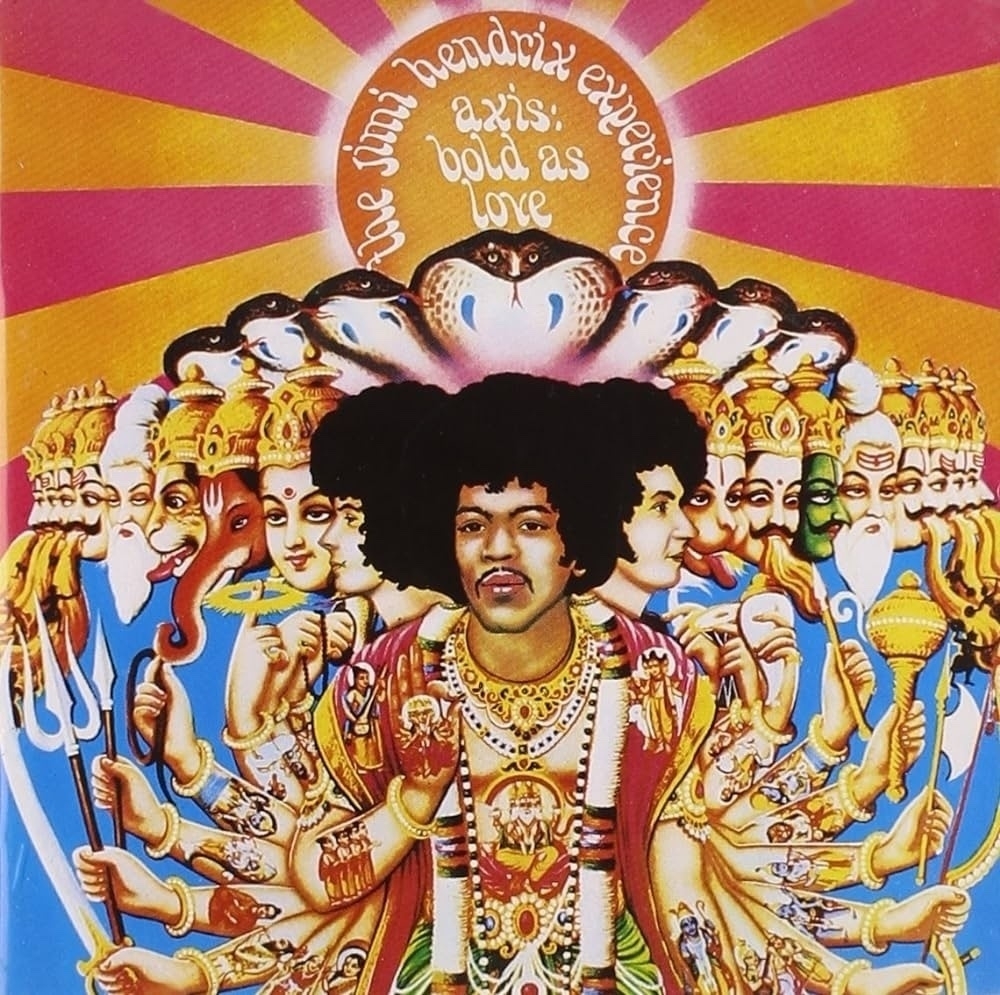
A perfect album. It gets a better “surround sound” effect from 1967-era analog stereo panning than most albums do from Dolby Atmos.
-
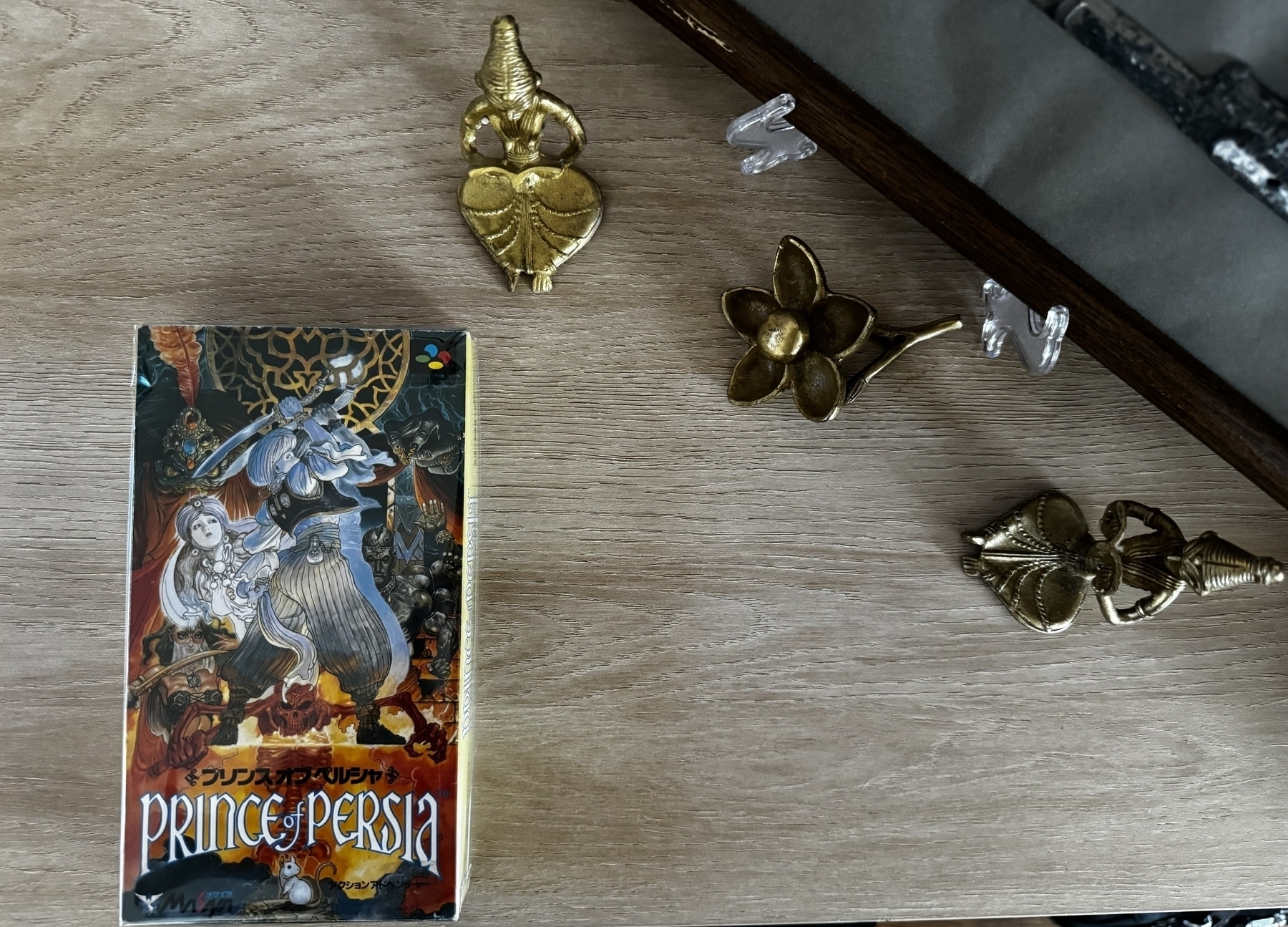
The Prince of Persia art for Super Famicom is super different than the Super Nintendo equivalent
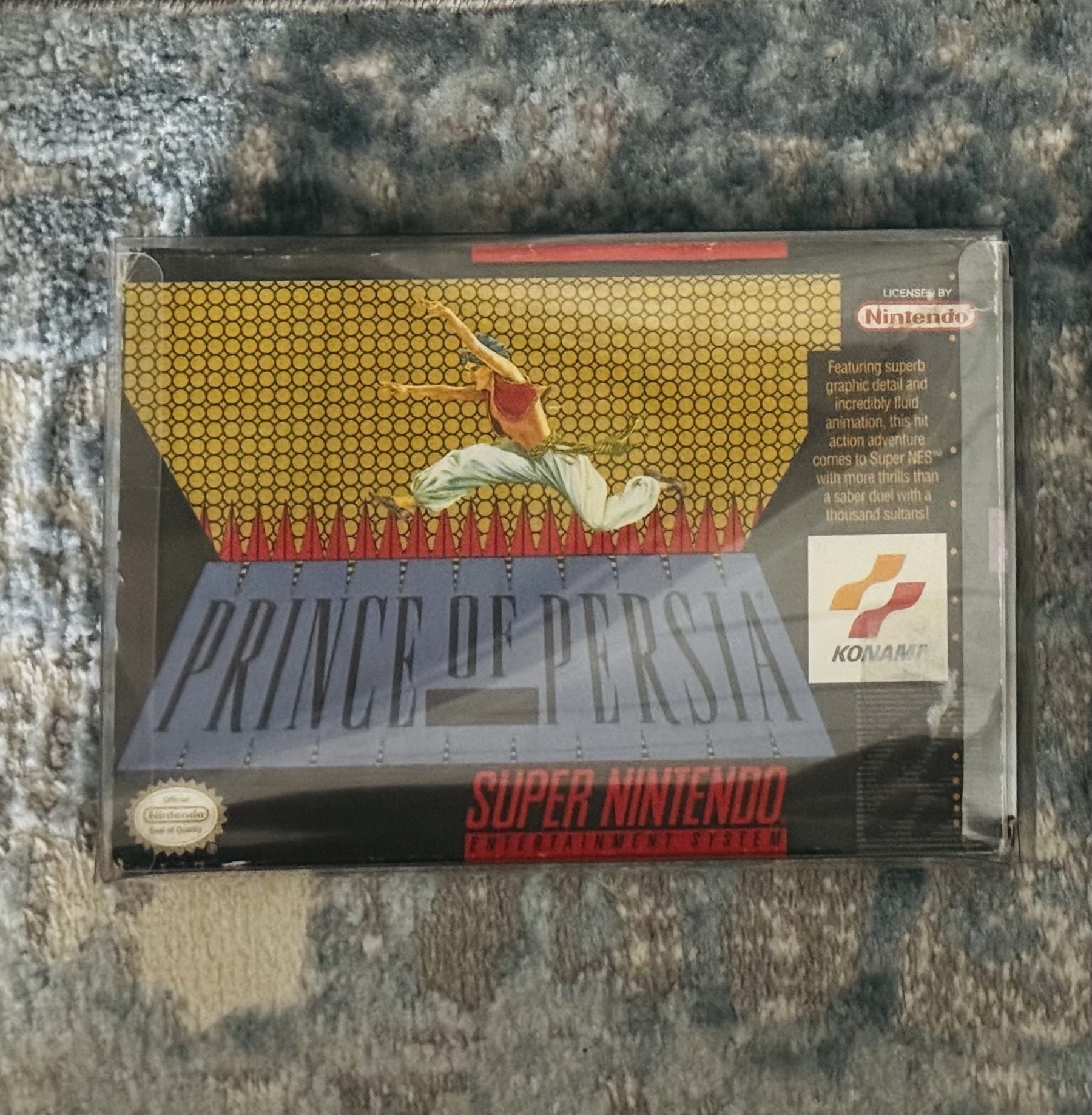
-
Star Wars: A New Hope on Video CD, a pre-DVD format that was most successful in Asia. Think slightly-better-than-VHS quality with CD audio. As far as I can tell, this is the only digital release that includes the 1997 Special Edition extras but none of the 2004 revisions.
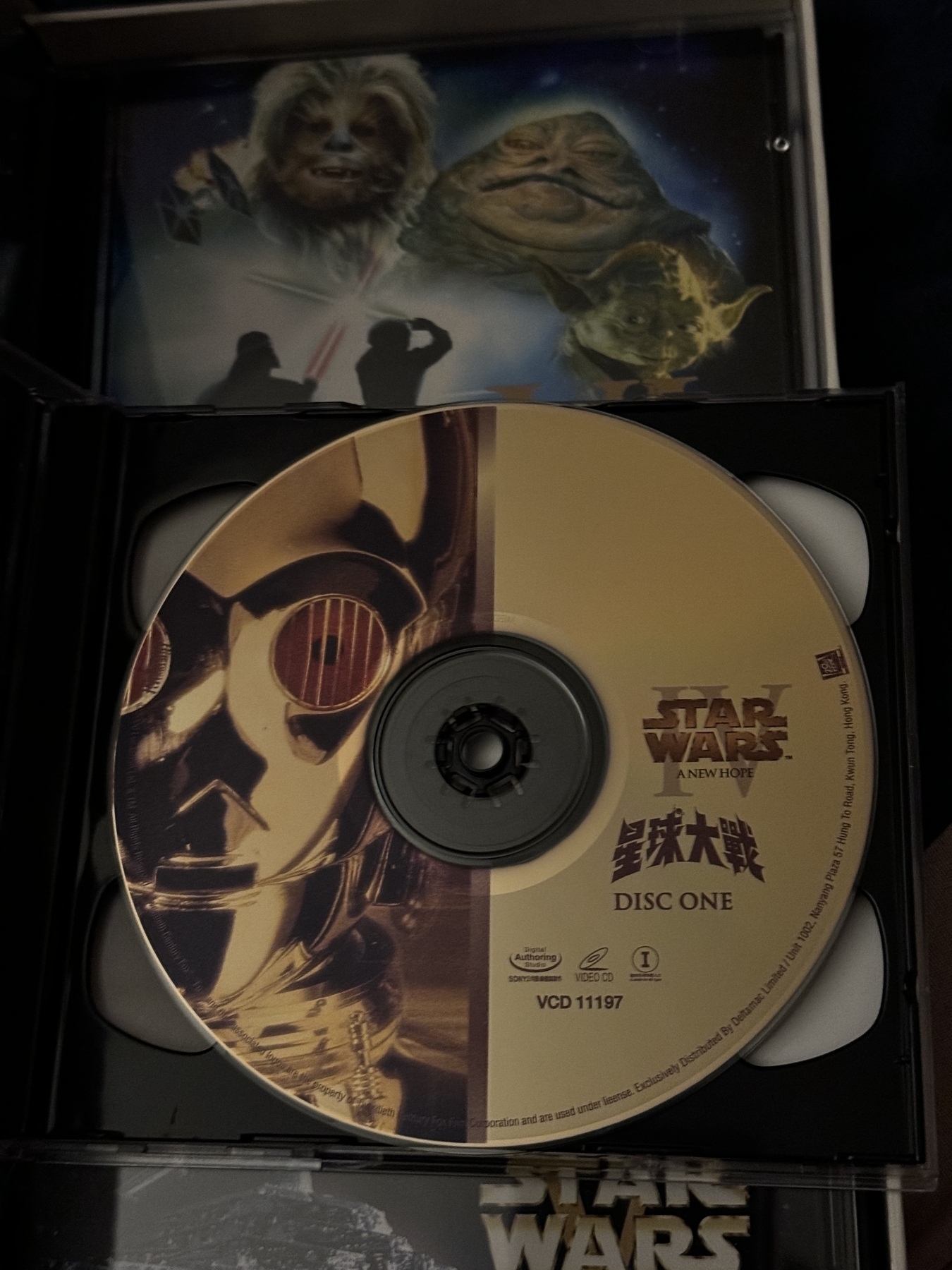
-
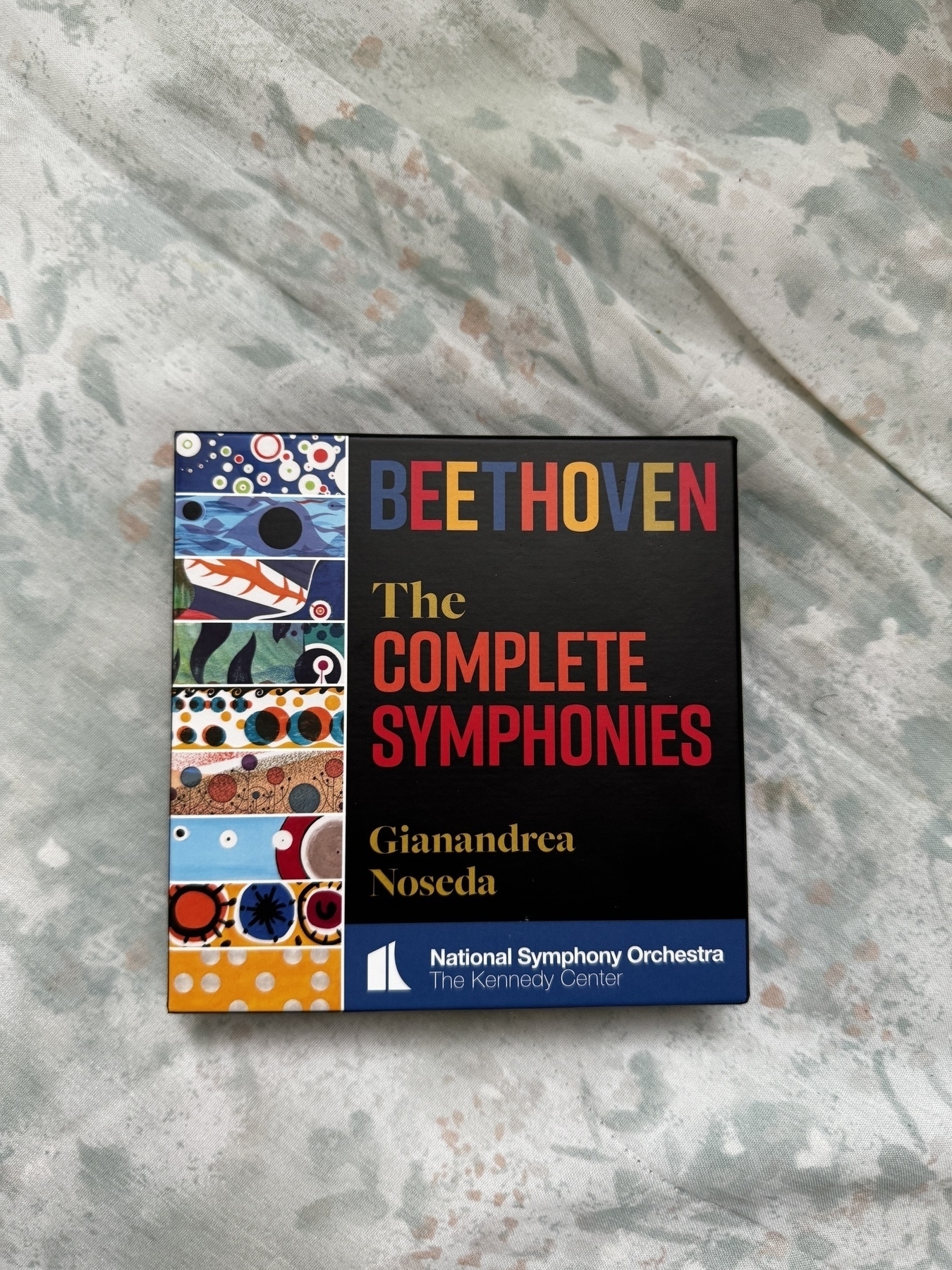
Amazing set for only $30:
- 5x Super Audio CD (SACD) with 5.1 mixes
- 2x Blu-ray Pure Audio with one included performance video
SACD is a 1-bit format with an extremely high sample rate (2.8224 MHz) and up to six channels of discrete sound. It never really broke through but has a niche following
-
Made an all-organic matcha latte:
- organic powder, oat milk, and sugar
- used an electric milk frother to dissolve the powder clumps in hot water
- flash-chilled it in a HyperChiller

-
That Dark Souls feeling when you approach a place you’ve been before, but from an unfamiliar angle, and it takes a second to realize where you are, except in real life…
-
Pitchfork
This is the belated follow-up to my earlier creative writing post.
–
The old house once removed and no longer standing still stuck that endless day into the sky like a CD spindle, capturing reddish swirling light from the sun almost tucked into bed behind the knobs. Hooked up to a computer in a room that’s since been crushed and vaporized, sometime in 2002 with my desktop speakers whistling through the thin-insulation-invading air, I searched for a review of Songs for the Deaf by Queens of the Stone Age. I’d mostly read about in Rolling Stone and the breathless British music press (“It belongs in the Tate Modern, 9/10”) and now I got to see some air wheezing out of its balloon that floated like the Adobe Illustrator birthed one on the cover of a 2008 trance music compilation I’d yet to even hear someday would, in the lights over Louisville far away. Less than 8.0 out of 10, said pitchforkmedia.com. An obsession is born, one that’ll be remade and recast with album reviews for the next 22 years, it’ll pull with a homepage-visit magnetism that’ll become a relic of an antique online land where push notifications weren’t born yet let alone passé.
“Remember that closing to the review of Wolf Parade’s debut? ‘Other folks will still remember where they were when they first heard Apologies to the Queen Mary’? We were out there helping move people into the dormitories of a university overseen by Ozymandias himself the day that was published, incoming blue-faced boxers going to study comparative lit beneath the banner of a Johnny Cash album cover and a muddy shoeprinted flyer for a party bearing John Coltrane’s photorealistic portrait. And on the web.archive.org pedestal, these words appear: ‘Shit, cat.’ I thought the maintenance guy had also said something like that to me as he pushed a coffin-sized cart past underneath the archway glowing damply into the quadrangle where the afternoon sun shone like a face shiny with too much sunscreen in a staring contest.
A puzzled (house) cat, fundamentally: But silently seeming to move in the sky instead of just meowing to end the eye-contact faceoff it’s destined to win with its always-on mouse-alert camera-eyes, big discs like unspinning microglitch records, knowing we’d blink first and retreat into the dorms to contemplate the paper artifacts of freshman-year essays, class scheduling cards, paper course catalogs, notepads with scribbles from landline calls to our rooms, scratched up, all of them, by cats intruding on daylight while we were off at class .”
“Yes, he was looking onward and backward, breathing so hard and shouting ‘Carpe diem’ and thinking this is what optimizing your life is, sucking the air desperately and secretly drearily like someone’s cock you know in advance you’ll only get one taste of, dismissively throat-punched and briefly breathless because you’re as disposable as the paper campus welcome pack 10 years later when you can feel the dust accumulating on your body itself, the paper becoming uncanny to feel because now it’s part of your body, too, maybe it’s all this detritus that makes weight gain unavoidable. The past is a basket that keeps filling up with anvils that I’m obligated to carry and then, even then, it was already ‘bodybuilder’s build’-esque enough, relentlessly solid and heavy despite a surprisingly slight profile that caressing it forced me to pull myself off the floor after a ‘footage not found’ interlude so I could gather for the daily Gospel reading, a 0.0 Pitchfork review of a Dismemberment Plan frontman’s first solo effort, which immediately made air a sacred commodity again.”
“Did you record your reaction?”
“I mean, it’s still there, on the site, it didn’t even get a revision during their second chance series. Reaction videos are some cities-of-the-plain style energy, God knows everyone hates that, they’re for performative enjoyment when the content itself is a pleasure dulled by being mass-produced at an unconsummable scale even for an online completionist and franchised to death, ‘oh look at how HARD I’m laughing at each timestamped moment.’ I should do that for that review, document myself breaking character hard as I react to how the lyrics apparently give no sense of closure, the actual mortal sin that Eve committed in Eden while she was composing some sensuous post-rock and decided to fill it out with some sleepy, dopey vocals, recorded after she’d eaten the fruit and they’d stayed up all night fucking as Milton so carefully described.”
“Speaking of which…let’s go lie down in the quad.”
“I don’t have any blankets, and without them, I’m naked to the grass and the world—”
The quad is minded by kids turned into fully grown skeletons with clipboards, fingered bonily with more speed than either thought or an uninvented iPad could muster. The crowd speaks from beyond in a cursed undocumented post-Tower of Babel tongue and there’s talk of Mogwai, how if you mixed their albums into one playlist you couldn’t even tell where one ended and another began unless you’d once been the grindset type who spent all night in online forum research rituals, soundtracking your long drives along roads dark as VHS magnetic tape spared from light while you hallucinate cat’s eyes looking at you in the trees to the side that have definitely been used as scratchposts for massive paws shaped like a playful mouse cursor indicator that the game was safely paused. They’re quiet, though, keeping alive the myth that nighttime is just the world on pause mode instead of when it rewinds itself, respools its energy to catch you in the sun-hot pain of its feline teeth the next day.
“In that case, I’ll go get some myself. But I’m fine if you want to go ask about the Mogwai discourse, in fact I’ll feel for now welcomed when you go. I’m gonna make it after all. We’ll part and then I’ll be embraced by the invisible entirety of the ‘gay community’ in the interim, who’re just out of frame in my room where I’m back reading the Wolf Parade review again and thinking ‘this is where I’ll remember I was, and though it’s a thin condom’s width away from the feeling of an abanoned house weighted down by old computers and boarded up rooms.’ Nostalgia is the desire for a previous era of commodification, it’s looking back at a computer catalog and reveling in not only how close it feels but how far, the missing pages and bygone references that were once manufactured with obsessive all-nighter paper-writer energy long since turned into sewer-clogging trash.
“I’m going to hide under the arch and think about my afternoonlong journey out into the soft storm to buy Zen Arcade by myself. I felt, in my every joint, a resolute anti-loneliness on that impromptu walk—no one arguing with me, no one flicking on and off a gas light in the attic when I was looking for my keys while giving a soliloquy about the impossibility of sending 5.1 PCM audio over an optical audio connection despite its seeming sci-fi future-codedness, no anxiety from seeing some guy’s yellow undershirt if I’d fatefully stepped into the dining hall on the way there. I was alone except for my thoughts and my iPod, no way I was lonely enough to even think of taking my cellphone with me, that is the total security of knowing that anything could wait, that there was anti-radioactive armor ensconcing me in a public boudoir.”
I’m still driving and now it’s light enough to see the old house catching some red-wavelength light to stir the shadows and make then rotate up into oblivion, for now. It’s safe, music is coming from within, people from across the street are coming over to start picking their own corn.
“When I finally got there, the record store was folded away in a sleeve-like building quietly off the crackling university thoroughfare. You were with me the whole time—”
“Yes, I came after all, you weren’t even the hero of your own story.”
“—and we’d become blue clouds: Like tiny software icons, dark logos with shapeless God-faces like cooled-down burning bushes optimally colored to pop and sizzle someday against the white-hot apocalypse sky. But for now: Stretched to fuzzy resolutions across mere pollution. With a tear I’d stolen from the rainbow—a lubricant for fucking around in reverie—I opened the record store door on the side of the mountain that scratched the palette-swapped cirrus. Where is childhood? Is it in here?”
The hillside avenues glittered outside. A man with a blue face, not enough oxygen to appear on Space Ghost: Coast to Coast, approached me inside and asked if I liked Wolf Parade.
“I remember where I was when I read the review, but for a while I only thought they were some screechy guys with tight jackets listened to by people who overdress during mild winters. When I heard it, I filed away ‘I’ll Believe in Anything’ because I knew I’d have some moments with it, when I’d want to look back on where I was, the sad times when I was enjoying something that has to be aged before it tastes of eventual happiness.”
Meanwhile, Zen Arcade, it gave me the courage to no longer wear sunglasses indoors. I took a picture in my dorm that day that would launch a thousand online flings but that for then was an etched proof-of-life to myself. I’d made the long journey to get the Holy Grail and Jesus and his disciples were digging through the crates, not for bread or fish but for 80s hardcore.
“Well that’s the thing about Johnny Rotten, he’s maybe as energetic as Sigmund Freud or at least Fredric Jameson, still writing books into 90s and here I am taking off my dress now, without touching my chest,” one of them who was the record clerk for the day was explaining to a customer hear in the land beneath the mountain. A dragon coiled so tightly it was the size of a big cat purred in the corner.
-
I remember the day I bought this album, on an impromptu afternoon walk through gray rains to a record store tucked away quietly off the busy university thoroughfare. 40 year anniversary this year; it exceeded even my high initial expectations, it changed my life.
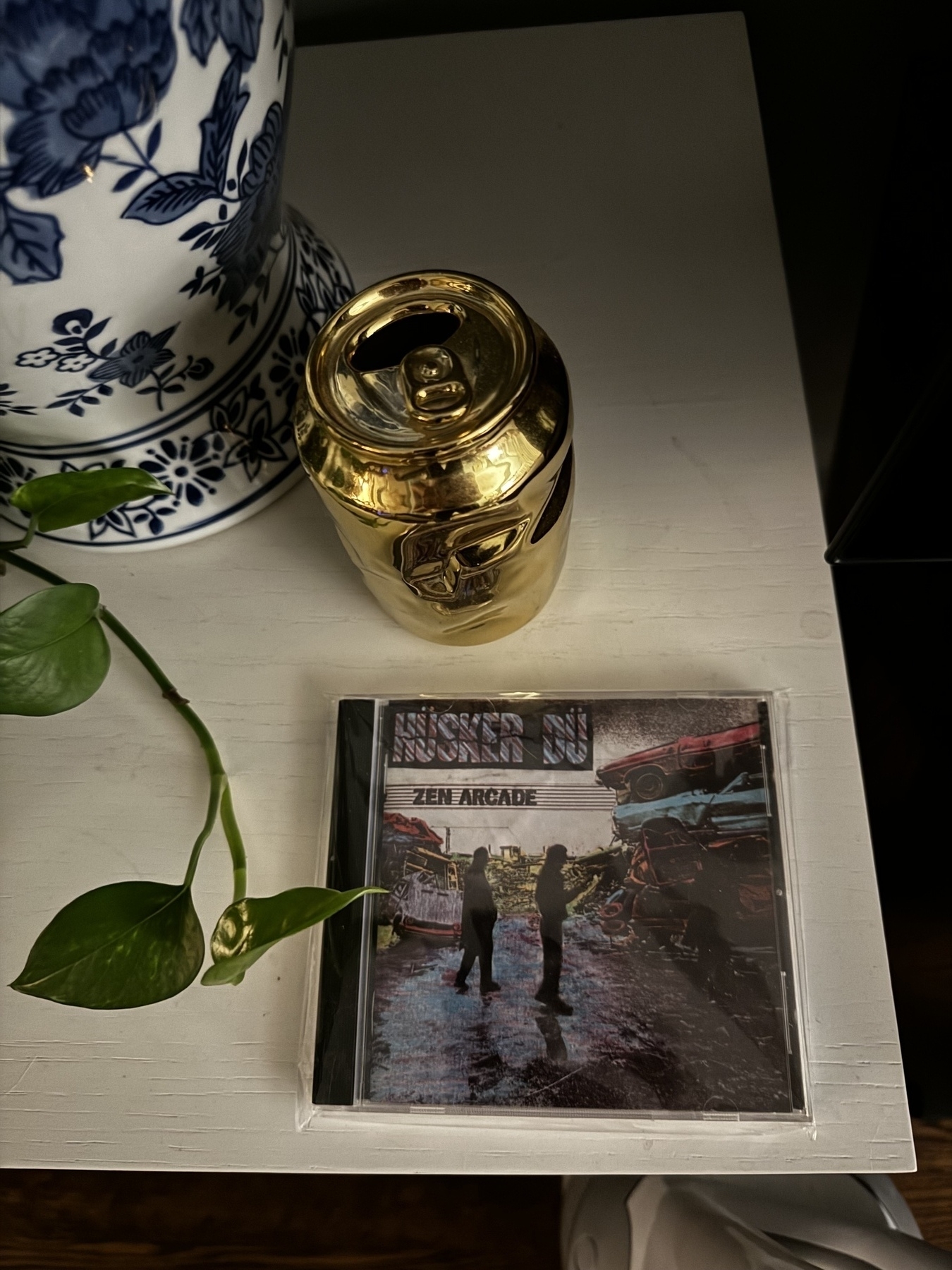
-
The CD index
I’m trying National Novel Writing Month this November! Not sure if I’ll be able to get through the entire 50,000 word requirement, but I’m going try. Here’s chapter 1:
–
Culture is gravity. It’s leaden prose and inescapably smelly brass-spittoon takes about the must-seeness of anything we’d have seen anyway. No one can breezily and actively curate their own cool garage of cultural artifacts—grafting some little wings on to a personalized library whose collective pages beckon the air itself to stir them, to send them in a happy accident flying out of their spines like plague-locusts to be eventually silhouetted against Noah’s great rainbow—without first enduring an ambient phlegmy rant on the greatness of Kid A or James Joyce, or the inevitability of poptimism, or what Normal People—the noble unwashed Offline Masses, owners of impeccable taste whose baseness we can’t mention and whose correctness we don’t question—think about all this.
I’d tried to explain to Joseph—even before he went to Neo-Egypt after he’d dreamed another dream that’d make his brothers drift off into nightmares in which they imagined him as gay as a $3 bill with a coat the shape and color of a CD-ROM held under distant and now breath-warm mideast sun—how vinyl records work, not because he had any persuaded interest in them but because the filmic gravity of Taylor Swift had pulled him beyond the event horizon of even caring about listening to music anymore. He didn’t own a turntable, didn’t know the difference between analog and digital sound, had never seen a concert film, one day hadn’t even engaged with the clickbaity-ADHDy thought of abruptly, finally paying five-figures to watch some compelling content, live, with legions of outstretched phones. Now he sat with a hardened heart letting plaquey plague cultures infect him and make him so heavy with passivity and content consumption that he felt hot, in the way only people carrying around extra energy on their bodies can, with large heads and round bellies in sync with the planets and the different symphonic movements that Gustav Holst scored for each such galactic wanderer.
“So, how do you skip between tracks?”
“The needle and the—well you have to move the needle manually to where these outlines are—but the notion here is that you listen to the entire side—”
“Side??”
“Unlike digital media, vinyl has the potential for a firm stop or an infinite loop that’d make a programmer jealous by actually being intentional—literally going on mansplaining and manlaughing forever, without jumping between songs or requiring any action. Like the needle can be retracted once the side reaches its capacity, or it can dig in and go on forever in Sgt. Pepper-esque chuckles. Like, you have to get up and go pull that needle off, and it can feel like the band had murder in its heart for you, telling me to fuck off, go fuck yourself, etc.”
“Is there data encoded into the record, where does the volume come from?”
“Vinyl isn’t computerized, it’s all waveforms traced by a needle.”
“I miss computers already.”
Ahh, computers: How the fuck do they work? Well: Not by jabbing a needle into a sludge of recycled sea insects with enough force to give them all posthumous Hepatitis C, tracing inside their bodies their old outside flight patterns so precisely as to make sound airy enough to be thrown out of their ancient guts, across Pharaoh’s pre-parted Red Sea, and at last back to the surface like a slick blackened wet whale breaking the face of the waters with amplified desperation for a little air, a little life. Joseph was newly vi-curious, but later on Moses would hate records, hate the bequeathed sand settling in the music-occupied grooves, hated the vinyl revival of 2005, hated the thought of a stylus that when cast down into the oily bowels became a serpent whose hisses dazzled the ears in crackly low dynamic range.
Ohh, Joseph. Before he journeyed into Neo-Egypt he showed me his mouth aflame with chewing tobacco that made his cheeks look Cubist and his record reviews sound like smokily flattering press releases. They lived on AI-written and SEO-optimized pages whose vapors wafted over the web like ponies whose manes had just started getting good in the back, running so fast that they were all neon hair, all surface, when they loaded into view out of the nothingess of the New Ancient Google search field void and then bespoiled the landscape with their hooves pounding toward word-count Valhalla. Inshallah, 500 words more and I’ve hit the quota—my manager is in the control room right now, watching everything I type.
“No one except complete madmen misses computers, at least not the way I sort of miss those ponies of yours and the problems they caused. A real case of the causes being good but the problems being bad. I can’t read anymore about the ‘Top 5 Things Every Would-Be Exodus Traveler Needs’ or ‘7 Harsh Truths From Yahweh’s Mouth That’ll Make You A Better Person’ or ‘Pharaoh Says If You Have This One Insect In Your Home, Throw It Out Immediately.’ But I liked how you wrote them!”
“Well, I do miss computers. I’m an independent content consumer. That’s what I heard in a the latest episode of my favorite podcast, Parallel. I might not hang out hearing songs on the radio or watching reruns of The Basket Floats by the River on cartridge, but I have choice, damn it, I’ve got agency, and—thanks, while I’m doing this bit—I have a completely original style—fuck you, Harold Bloom, I invented the human—that can only be honed by watching everything in the Spotlight and What’s Hot rows of Netflix and recycling the verbiage of the first page of results I seee for “Euphoria review.”
“How do you feel about sex scenes in media?”
“I’m against them, no movie or TV show needs that because it distracts from the plot and from the ponies and from the—”
“And if something that’s ‘hot’ or ‘trending’ has it in them?”
“I need to say this, but you are too online, you’re quoting back takes on misinformation from that known plagiarist Cain at Buzzfeed and —”
“How can I be too online when I still listen to most my music on a disc player, as God himself intended. You were worried about skipping tracks on vinyl, right? Well did you know that CDs pioneered track indexing and that now that we’ve gone to streaming, some of that is getting lost again?”
“I care about skipping because although I like the first two tracks on 1989—”
“—and I remember you didn’t like anything after the first two books of the Bible, either, hello where is my digital audiobook skipping, is that anything?”
“CDs are so passé though, even Adam disliked it, and vinyl skip or no vinyl skip, well maybe that’s not important, I like having these records in a gallery to show people on my Zoom calls about how this client needs 10,000 more words that I’ll have to count out in increments of ten as I type after the contract is inked, and then pause for a 30-minute break to think about what it’d be like to do literally anything more fulfilling, like sticking my head inside a grand piano and giving a lecture on nationalism that really, uh, resonates with the audience, or about how, if this were all being done with pen and paper, such inhumane Pharaoh-mandated volume wouldn’t be practical.”
I’m zooming into someone’s space where there’s a painting visible in the background as a landscape for conversation, it’s of a man smoking a cigar and lifting a turntable stylus to play surely the most authentic music ever recorded, some backwoods country or synthpop made with real analog syntheiszers from the 1960s. Here’s my conversation snippet, later recorded as a lecture as we exited Neo-Egypt for good, or at least for a few millennia:
“When music moved away from CDs starting after Adam left Eden, vinyl was the new covenant. But like streaming with its vast array of so much content that it could never be consumed while staying biblically thin, vinyl is more of an idea than an instrument, meant to be admired more than enjoyed viscerally. You can’t skip around, you have to endure the entire side, like you’re being forced to watch the star soccer player thread his passes to inept torch carriers who could never hold the angel’s flaming sword, you have to tsk in forum thread-ese at how the low-end just isn’t as deep and the high-end just isn’t as bright.
But you know what’s high-quality and in a unit that’s realistically consumable for real human beings and real heroes? Actual CDs. CD albums also have digitally indexed tracks, and they can be shuffled, in ways that linear analog media such as LPs and cassette tapes can’t. Giving into the shuffle is liberating because there’s no more illusion of active curation, of being a bootstrapping tastemaker libertarian who recommends culture yet believes they’re above all its pervasive influence, a motivated detail-oriented self-starter who arranges everything as immaculately as a triple-washed résumé and like a robot HR department reading it, dings 99% of everything on it for not sounding as good as whatever they heard across an acoustically perfect greenhouse when they were 18—for not truly believing in the role.
Shuffling, though—doesn’t it go against what the artists intended for those albums? What if you applied similar logic to Genesis or Exodus or, Yahweh forbid, even Leviticus and read the verses in random order? “Ye shall eat the fat of the land, and darkness was on the face of the deep” sounds like cringe marketing for would-be Wegovy patients. Books, then, are less amenable than movies or music to such cut-and-paste logic, but according to the Parallel show hosts separting the art from the artist is imperative—indeed, maybe the point of all interpretation!—and shufflng does that. Yet some albums defy this anonymity, this freedom from responsibility that Joseph and the other critics imagine is possible when critiquing anything this way. There’s still an analog voice, some cigarette-touched vocal cords or lead-poisoned brain cells oozing like oil from a spill uncontrollable even by the most robust cloud-based IT solutions that bleed out to their end-users as faultless and blamless digital interfaces that aim to compute and control everything.
Apollo 18 was a huge influence on Moses, a revelation that got him to swear off vinyl and linearity forever (or at least three times), but Lumpy Gravy? It was his ticket to finding a that voice in the cloudy wilderness and deciding that the way out of Neo-Egypt was to build his own golden calf of a carefully curated collection that nevertheless yielded to the random gravity of culture, through divinely elected shuffling.
-
That oily sweat-tingling feeling from unexpected autumn warmth—when it’s hot out but oughta be cold, and your brain turns into a fruitful bough by a well of water for sweet-teeth—is dark liberation, a cheater’s affect that feels so righteous as you flaunt the sunglassed archers, the Agents of S.A.D.
-
Two screaming album covers for albums without much screaming on them
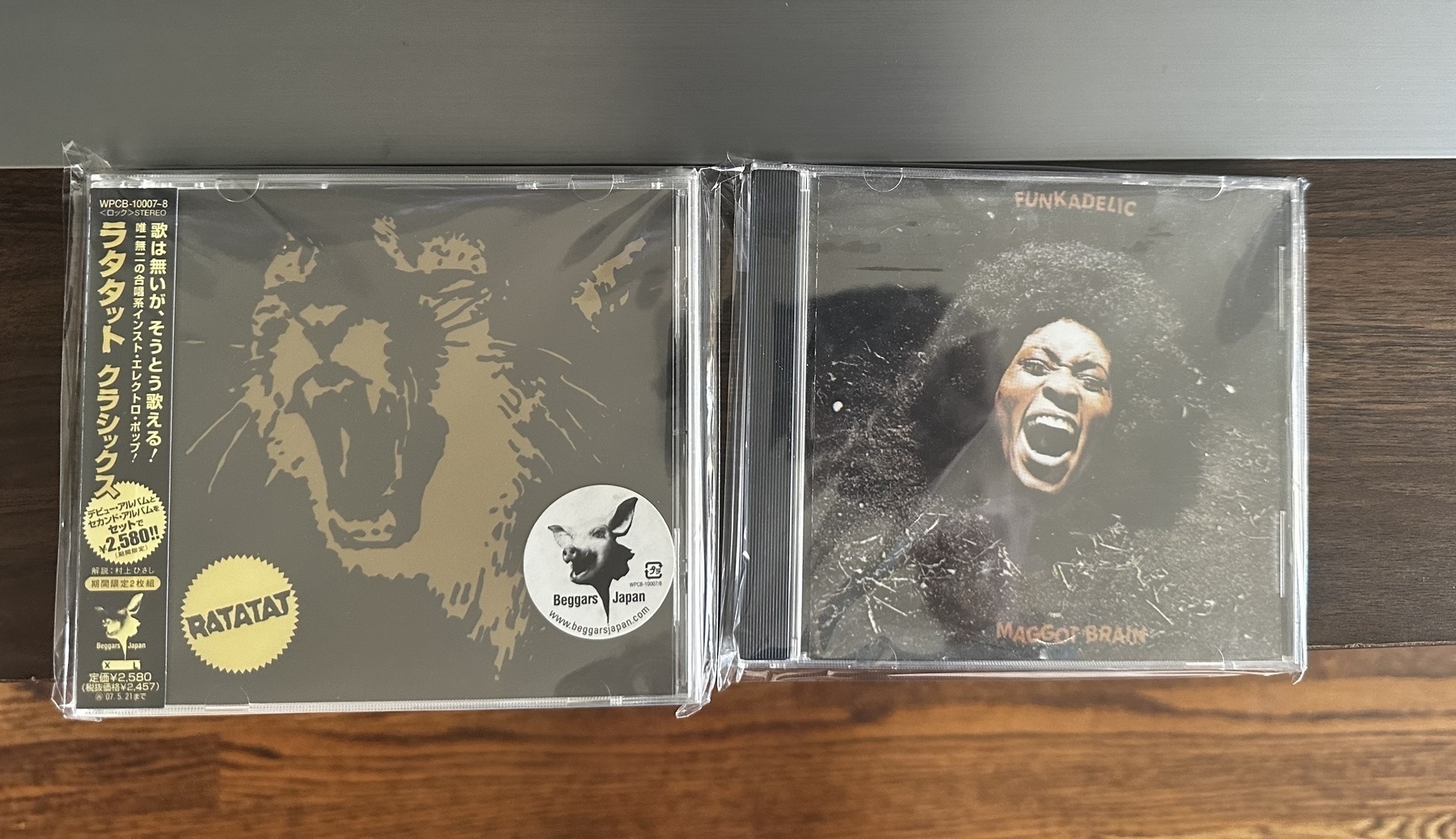
-
Some throwback listening 💿
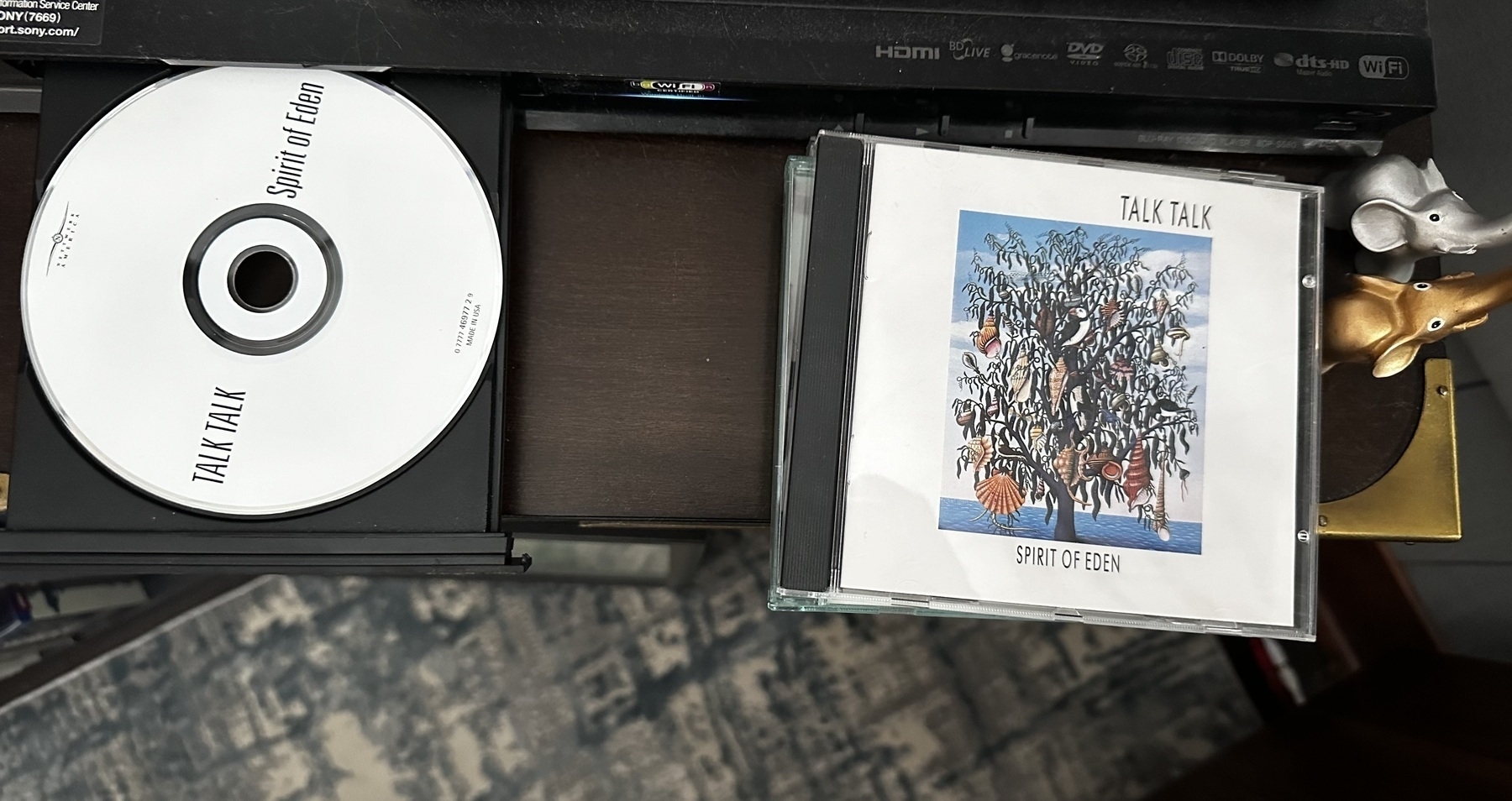
-
Basking in the fall sunlight

-
Even my 🐈 enjoys Super Turrican: Director’s Cut, a restored genuine Super Nintendo game that’s bundled with the Analogue Super NT retro console.
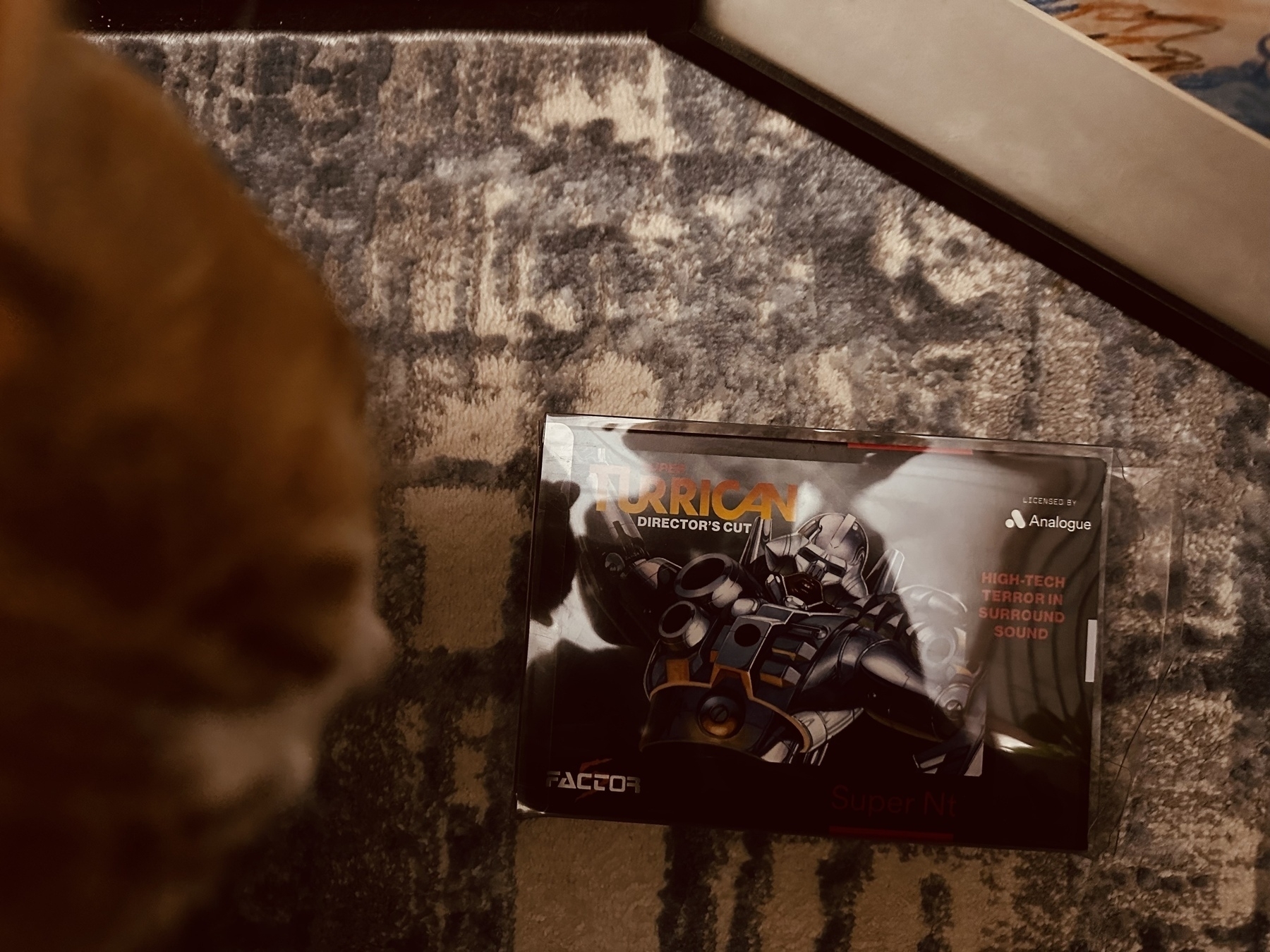
-
Some cassette tape listening
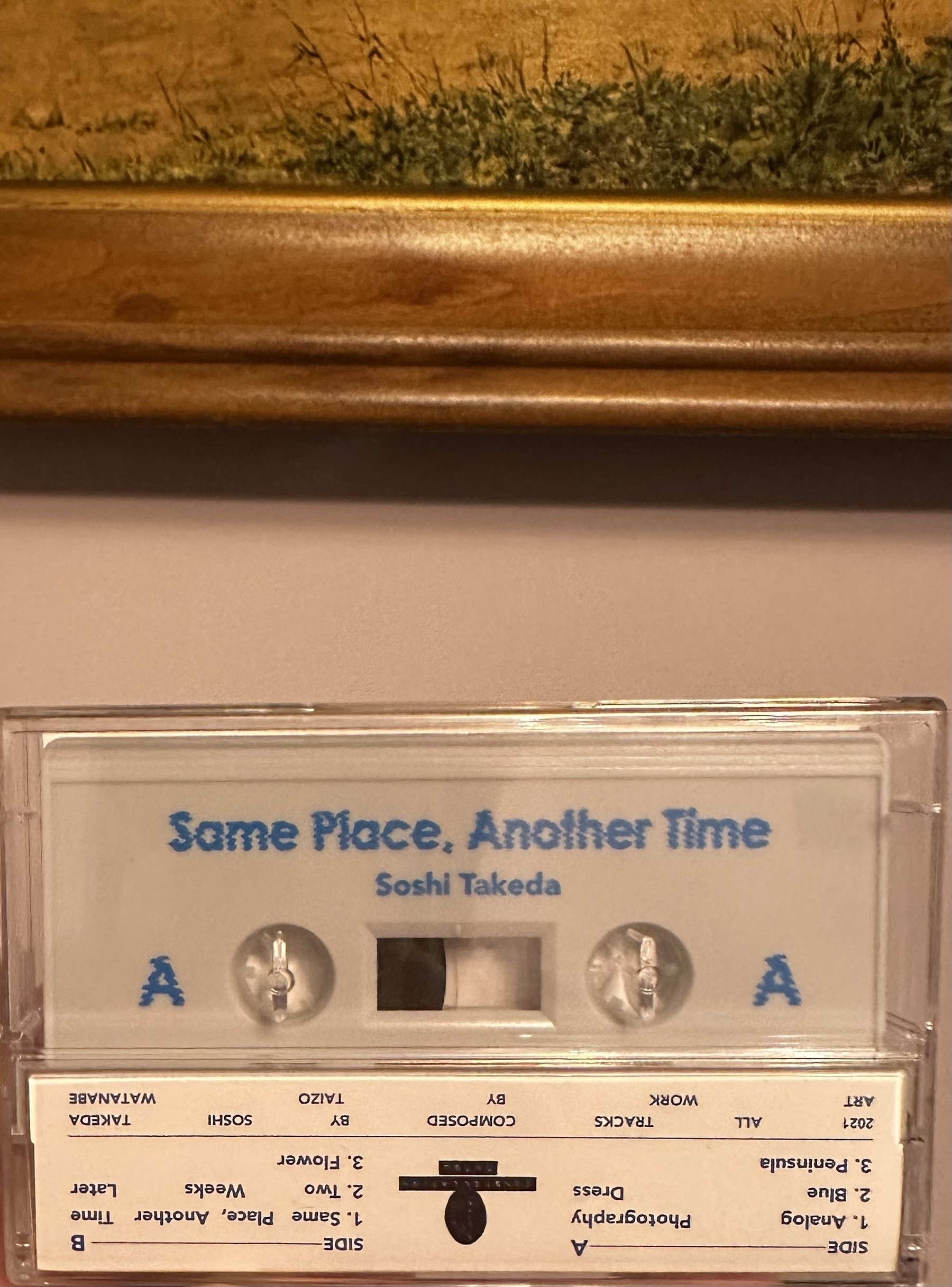
-
Diet culture, exposed: the legacy of Requiem for a Dream
“I’m thinking thin!”
In the 2000 film Requiem for a Dream, that’s the hopeful refrain from Sara Goldfarb (played extravagantly by Ellen Burstyn) as she embarks on a crash diet—black coffee, hard-boiled eggs, and half a grapefruit each morning—to lose 10 lbs in 10 days. The underlying goal (because there’s always one with dieting, no one diets for its own sake): Fit into an old red dress she wants to wear when she appears on television after winning a mail-in sweepstakes1.
Spoiler alert for a 23-year old movie: She can’t stick to the diet and so she seeks medication to assist her weight loss. A doctor prescribes her a daily course of amphetamines, i.e., the diet pills du jour from when the story was set in the mid 20th century.
The results are stunning: She loses her 10 lbs and then some, but—shocker—that proves tough to sustain without increasing her dosage. Soon she’s psychotic, imagining the refrigerators talking to her and that the huckstery, infomercial-immersed host of the show she delusionally thinks she’ll be on is in her living room alongside her fantasized thin red self2, mocking the messiness of her Brighton Beach apartment. Eventually she ends up virtually vegetative.
Her plot line, more so than the other three that involve three other characters’ struggles with heroin, is what makes Requiem for Dream linger3 in my mind. Rarely does any quasi-mainstream4 movie portray diet culture for what it really is—a money-making cult that drives its followers literally insane while destroying their health.
The notions that weight loss is A) desirable for health reasons and B) sustainable have no roots in scientific evidence.5 Any substantial weight loss is regained and then some in 95% of people. This inevitable weight cycling is itself far more provably harmful than being “obese”6—in other words, by telling people to diet, doctors are essentially prescribing the thing they’re nominally trying to prevent.
Medications for weight loss have a horrible track record. I mean, look at the fucking tables in this paper—and this was before the disastrous fen-phen cocktail of the 90s. As with the destructive baldness medication Propecia, weight-loss meds are pushed on the desperate public with zeal despite their concerning side-effect profiles7 and their relatively meager benefits8. I wouldn’t trust Wegovy et al. at all given the history and the culture that made them.
The weight loss imperative thrust on “obese” patients is an aesthetic and political concern—“fat people are disgusting,” more or less—masquerading as a medical diagnosis. And its costs are immense, not just financially but also in terms of the effects on people’s physical and mental health’s and their enjoyment of life. Perfectly good and nutritious food gets branded as “sinful,” “a guilty pleasure,” or part of a “cheat day/meal.” There’s thus a religious, Puritanical thrust to the dieting madness.
And for what? There’s no reward on the other side except for short-term weight loss that’ll be reversed, people who’ll tell you look great even if your weight loss was the result of some illness (the easiest way by far to lose weight, and a hint at how unhealthy it is), and more madness counting calories and going slowly mad in your home like Sara Goldfarb.
-
She never hears back about this contest. ↩︎
-
This reminded me in the imagery of the Laurent Garnier song “The Man with the Red Face.” ↩︎
-
The Cranberries? Anyone? ↩︎
-
It was rated NC-17 but it’s by Darren Aronofksy, a major director who also did the awful The Whale. ↩︎
-
On this point I recommend The Obesity Myth by Paul Campos. ↩︎
-
“Obese” is not a real disease. Its only indicator—BMI—is a pseudoscientific formula made upby a literal astrologer. I recommend What’s Wrong With Fat? by Abigail Saguy on how the “obesity epidemic” was manufactured from whole cloth in the 1990s. ↩︎
-
Propecia can cause irreversible damage to the male reproductive system. Wegovy can damage the thyroid, among other effects. Both come with an FDA “black box” warning. ↩︎
-
Yes, even the “miracle” new diet injections plateau and reverse after a while. ↩︎
-